


Last Updated December 20th 2025:
This guide is being refreshed for 2026. Over the past few months, I’ve been shooting with the Ricoh GR IV throughout autumn to see whether it genuinely deserves a place on this list — not as a spec-sheet update, but as a real-world travel camera. I’ve also compared it directly to the previous model.
Most “best compact cameras” lists get rewritten every January with the same cameras shuffled around. This one doesn’t. Every camera below is either in my bag right now or something I’ve owned and used long enough to understand properly — the strengths, the compromises, and whether it actually makes sense for travel photography when you’re tired, moving quickly, or trying to keep up with your kids.
If you want the short version: these are the compact cameras that still earn their place in 2026 because they give you a real step up in image quality over a phone, without dragging you into the world of full systems and interchangeable lenses. And if you’re deciding between a compact and a bigger setup, I’ve also compared the best travel cameras across all systems.
For photographers looking at larger systems with lenses and more performance flexibility, I’ve also compared the best mirrorless cameras and for those wanting to capture moments of their family then here are the best cameras for family photography.
TL;DR — Best Compact Cameras for Travel (2026)
Best compact camera 2026: Fujifilm X100VI — the most balanced option overall, with excellent image quality, autofocus, and handling for travel and family photography.
Best pocketable camera 2026: Ricoh GR IV — the best true everyday carry camera available right now, combining a genuinely pocket-sized body with APS-C image quality.
Best compact camera with a zoom lens: Sony RX100 VII — the most flexible choice if you want one small camera to cover everything from wide-angle to telephoto.
Who needs a compact camera for travel photography these days, when smartphones are already in our pockets?
If you’re thinking that, you’re not alone — but smartphones, despite what you read, are simply not as good. Here’s why your phone camera isn’t good enough if you actually care about photography.
If you’re searching for the best compact camera in 2026, this guide is based on cameras I’ve personally owned and shot with (and one I’d love to because it’s too compelling to ignore).
I’ve got a few prints on my wall, and one of them makes me shiver every time I see it. It was taken on an iPhone 14 Pro, and even at just A3 size, it looks horrible. Plastic-looking skin and gaudy colours. Stepping up to modern Micro Four Thirds cameras such as the Om Systems OM3 or those with even larger sensors can be a huge upgrade to your photography. If you are looking for the best cameras for travel photography and not just compact cameras then I wrote a full article on that too.
So yes, smartphones are convenient. But if you actually care about your travel and family photos, then you probably — like me — want something that gives you better results, without lugging around a full camera bag and five lenses. Or maybe you do want a full camera system, if so then this article is for you.
If you want to compare two of the best travel cameras then I put the Fujifilm X100VI vs the OM Systems OM-3 in this article.
Every camera I’m about to mention is one I currently own or have previously owned.
Well — except one. But it’s too good to leave out.


The best compact camera 2026: Fujifilm X100VI
- 40MP APS-C X-Trans CMOS sensor
- Fixed 23mm f/2 lens (35mm full-frame equivalent)
- 5-axis in-body image stabilization (IBIS)
- Hybrid AF with subject & face/eye detection
- 3″ tilting touchscreen LCD
- 4K video recording (up to 60p)
- Compact, lightweight body (approx. 521 g)
- USB-C charging and Wi-Fi/Bluetooth transfer
- Hybrid optical / electronic viewfinder
- Battery: NP-W126S (approx. 450 shots per charge)
I own the X100VI and use it as my lightweight travel and family camera. It’s my pick for the best compact camera 2026. Even after the release of the Ricoh GRIV, I still choose the Fuji X100VI most of the time thanks to all the reasons I discuss below. For more details see my X100VI vs GRIV comparison.
It’s earned its place for good reason. It’s small and light, offers a large APS-C sensor, and delivers 40MP of excellent image quality. The lens is a fixed focal length of 23mm (full-frame 35mm equivalent), which is a really flexible focal length. It’s wide enough to capture most scenes (important when you’re travelling to new places and want to take in the sights), yet not so wide that it distorts things and makes your kids look like they’ve been telling a lot of lies lately. (Pinocchio reference.)
I also featured it in my Best Fujifilm Cameras and Lenses for Travel Photography in 2025 article — because frankly, it’s still one of the best all-in-one travel cameras you can buy.
The lens is bright at f/2, which means you can keep taking photos well into the evening and they still look good. You can also get great shallow depth of field when shooting your family to give your shots a professional look.

The JPEGs are among the best of any camera, so you won’t need to spend hours behind a computer screen editing your photos before they can be shown. And the camera can wirelessly send photos to your phone automatically or manually, so you can quickly share your travels with friends, family, or your adoring fans.
Autofocus is quick, and it has automatic face and eye modes that let you concentrate on composition. If you stick a lens adapter and filter on it, it’s also weather sealed — meaning dust, sand, and water are kept out.
The battery is good enough to use most of the day (although I’d always recommend a spare), and it takes cheap and readily available SD cards.
Overall: If you want one of the best cameras available for travel and family photos in a small and light package, this is a top choice. Just make sure to kit it out properly — I’ve listed my recommended accessories for the Fuji X100VI if you need a starting point. The only issue is that you might struggle to get one quickly — everyone else agrees, and they’re in short supply.
Where to Buy the Fujifilm X100VI
If this article helped you decide on the X100VI, you can support my work by using the link below. It won’t cost you anything extra, but it helps me keep creating honest, long-term reviews and guides.
Check Price on Amazon


Best Pocketable Compact Camera 2026 – Ricoh GR IV
- 26MP APS-C CMOS sensor
- Fixed 18.3mm f/2.8 lens (28mm full-frame equivalent)
- 5-axis sensor-shift image stabilization (IBIS)
- Hybrid autofocus with face detection
- Fixed 3″ touchscreen LCD
- Full HD video recording
- Ultra-compact, pocketable body (approx. 262 g)
- USB-C charging and Wi-Fi/Bluetooth connectivity
- Snap Focus mode for fast street shooting
- Battery: DB-120 (improved real-world endurance)
The Ricoh GR IV is the most recent compact camera release — and easily the most important one this year. On paper, I’ll admit I was initially a little underwhelmed by the specs. But once I stopped looking at what it added and instead focused on what the GR III was missing, the GR IV became far more compelling. I compared the GRIV against the GRIII in more detail.
In essence, it keeps everything that made the Ricoh GR III so appealing: a genuinely pocketable body and a large APS-C sensor that delivers excellent image quality. What it improves — and this matters — is usability as I found out in my Ricoh GRIV review.

Autofocus is significantly better in daylight. It’s now genuinely usable for everyday shooting, with reliable face detection that makes it far less frustrating when photographing people. This alone makes the camera feel more modern and capable than the GR III ever did.
Battery life is also much improved. In my testing, I took the GR IV to Dumaguete with just a single battery and managed to shoot all day with a bit of care. That would simply never have been possible with the GR III, where carrying multiple spares was essential.
Image quality has seen a subtle but welcome refinement too. The lens is a little sharper in the corners, and files look crisper and cleaner overall. In-body image stabilization has also been improved compared to the GR III, which helps when shooting stationary subjects in lower light and makes it easier to keep ISO under control.
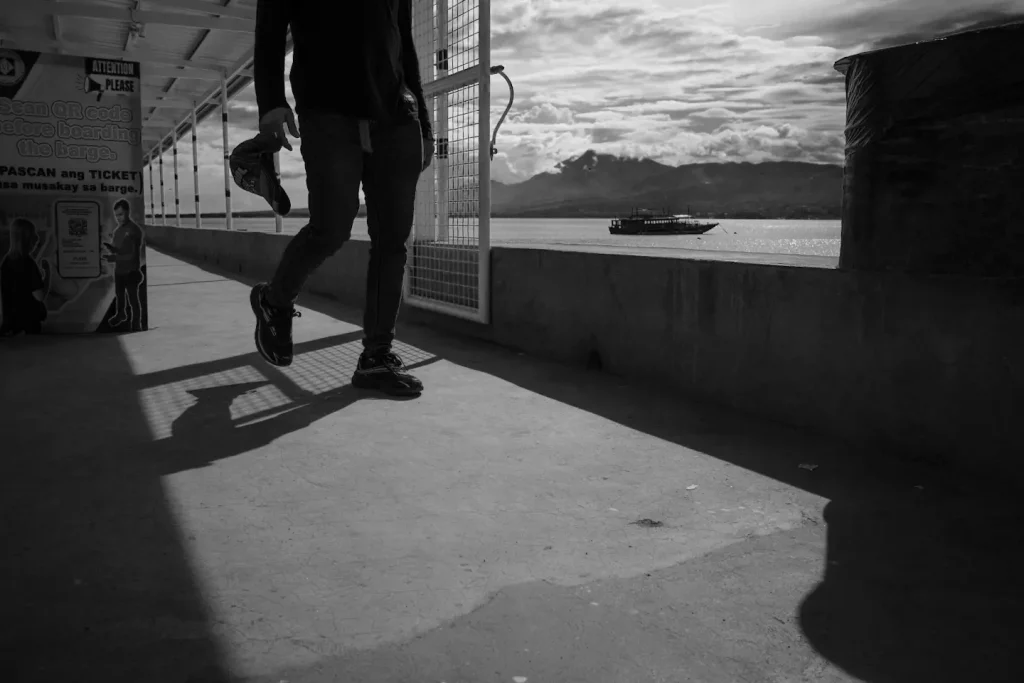
There are still limitations. Autofocus struggles at night, and despite many people hoping for it, the GR IV doesn’t get weather sealing. The fixed rear LCD is unchanged too — perfectly usable most of the time, but a real challenge in bright daylight. Ricoh has tweaked a couple of rear buttons, which improves ergonomics slightly, but overall this still feels very much like a GR.
That’s not a bad thing. The GR IV feels like a faster, more confident, more modern version of the GR III — and that’s exactly what most people wanted.
The price has gone up compared to the GR III’s original launch, but that’s hardly surprising given rising costs across the board in recent years.
Overall, if you want the best pocket camera currently available, and you value something that works as a true everyday carry, the Ricoh GR IV is the strongest option right now. That said, it doesn’t make the GR III obsolete. If you can find a used GR III at a good price, it’s still well worth considering.
Buy the Ricoh GR IV if you want the best image quality in the smallest package — a genuinely pocketable camera you’ll actually carry every day. It’s ideal for travel, street photography, and a proper everyday carry when you want a real camera with you at all times.
Where to Buy the Ricoh GR IV
If the Ricoh GR IV looks like the right everyday carry camera for you, you can support my work by using the link below. It won’t cost you anything extra, but it helps me keep publishing honest, long-term reviews and guides.
Check Price on Amazon
Why the Ricoh GRIII is still worth considering
- 24MP APS-C CMOS sensor
- Fixed 18.3mm f/2.8 lens (28mm full-frame equivalent)
- 3-axis sensor-shift image stabilization (IBIS)
- Hybrid autofocus (contrast + phase detection)
- Fixed 3″ touchscreen LCD
- Full HD video recording
- Ultra-compact, pocketable body (approx. 262 g)
- USB-C charging and Wi-Fi/Bluetooth connectivity
- Snap Focus mode for fast street shooting
- Battery: DB-110 (approx. 200 shots per charge)
If you want to save some money but still want a truly pocketable camera in 2026 then the Ricoh GRIII is still more than capable, especially as used prices will come down thanks to the release of the Ricoh GRIV. See my Ricoh GRIII review for more details.

It is truly pocketable. And by that I mean jeans-pocket small. It’s actually smaller than most smartphones. Despite that, it still packs the same large APS-C sensor as the Fuji X100VI and offers a similar fixed-lens design — I compared the two in detail in this X100VI vs GR III article, if you’re torn between them.
The lens gives you a slightly wider field of view — 28mm full-frame equivalent — which makes it even better for photographing cities, tighter spaces, or just trying to fit multiple children going in different directions into the same frame. With an aperture of f/2.8, it’s not quite as strong as the Fuji in low light, and it doesn’t offer the same level of shallow depth of field for that “pro” look, but the image quality is every bit as good.


The JPEGs are also excellent — no need to edit unless you want to — and the lens automatically retracts into the body when turned off, which keeps it protected. It’s not weather sealed, but because it’s so compact, you can easily slip it back into your pocket the moment the weather turns.
Battery life is pretty poor, though — definitely buy at least two spares if you’re planning a full day of shooting.
It’s worth noting that this is an older model, released back in 2019, so the autofocus isn’t quite up to the standards of newer cameras. It’ll lock onto stationary subjects just fine, but if you’re trying to capture fast-moving kids, look elsewhere.
That said, it has a useful trick up its sleeve — you can set it to pre-focus at a fixed distance (which you can customise), then stop down to something like f/8 and rely on depth of field to get nearly everything in focus. It’s quick, efficient, and works brilliantly in the right context.
Ricoh have also just released an updated GR app specifically for this camera series. It allows you to wirelessly transfer images to your phone and manage the camera remotely.
Buy this if you want the best image-quality-to-size ratio known to man (or at least to me), and don’t need blazing-fast autofocus. These cameras are so good for their size that I own one myself — and even bought the next camera I’m going to talk about for my 9-year-old daughter so we could enjoy photography together.
Oh — and it’s around 50% cheaper than the X100VI. And you can usually find one in stock.
Where to Buy the Ricoh GR III
If you’re ready to pick up the GR III, you can use the link below to support this site. It won’t cost you anything extra, but it helps me keep writing in-depth reviews and guides for photographers like you.
Check Price on Amazon
Best Pocket Compact Camera Alternative – Ricoh GRIIIx
- 24MP APS-C CMOS sensor
- Fixed 26.1mm f/2.8 lens (40mm full-frame equivalent)
- 3-axis in-body image stabilization (IBIS)
- Hybrid AF (contrast + phase detection)
- Fixed 3″ touchscreen LCD
- Full HD video up to 60 fps
- Compact, pocketable design (approx. 262 g)
- USB-C charging and Wi-Fi/Bluetooth transfer
- Snap Focus mode for fast street shooting
- Battery: DB-110 (approx. 200 shots per charge)
If you like everything about the Ricoh GR III but prefer a less wide lens than its 28mm equivalent, the GR IIIx is the one to get.

This is the camera I bought for my daughter, Sofia. The tighter focal length makes composing easier — you can concentrate on your subject without constantly fighting clutter creeping into the edges of the frame (something that happens a lot with wider lenses when you’re learning).
The 40mm equivalent field of view is close to how scenes feel to the human eye, so photos look natural. It also lets you create a bit more shallow depth of field than the GR III, which helps people shots pop and generally flatters faces more than 28mm does.
Otherwise, it’s basically the same camera: same sensor, same pocketable size, same excellent image quality, same retracting lens, same poor battery life (buy spares). That’s the beauty of the GR system — pick your focal length.

Between the GR III and GR IIIx, Ricoh have covered the two most popular everyday viewpoints: wide-ish (28mm) for environments and tight spaces, and normal-ish (40mm) for people, detail, and general travel.
And here’s a fun thought: for the price some scalpers are charging for a Fuji X100VI, you could buy both the GR III and GR IIIx — giving you two APS-C pocket cameras and both focal lengths, all taking up hardly any room in your bag or even your pockets.
Buy the GR IIIx if you prefer the focal length, take more people shots, and like natural-looking photos.
Where to Buy the Ricoh GR IIIx
If you prefer the 40mm-equivalent field of view, the GR IIIx is the one to get. You can support my site by using the affiliate link below — it costs you nothing extra and helps keep these detailed reviews coming.
Check Price on Amazon

Most Flexible Lightweight Travel Camera – Sony RX100 VII
- 20MP 1″ stacked CMOS sensor
- 24–200mm f/2.8–4.5 equivalent zoom lens
- Optical SteadyShot image stabilization
- Fast hybrid AF with Real-time Eye AF & tracking
- Pop-up 2.36M-dot OLED electronic viewfinder
- 3″ tilting touchscreen LCD
- 4K30p & Full HD up to 120fps video
- USB-C charging, Wi-Fi & Bluetooth connectivity
- Compact pocketable body — ~302 g
- Battery: NP-BX1 (approx. 260 shots per charge)
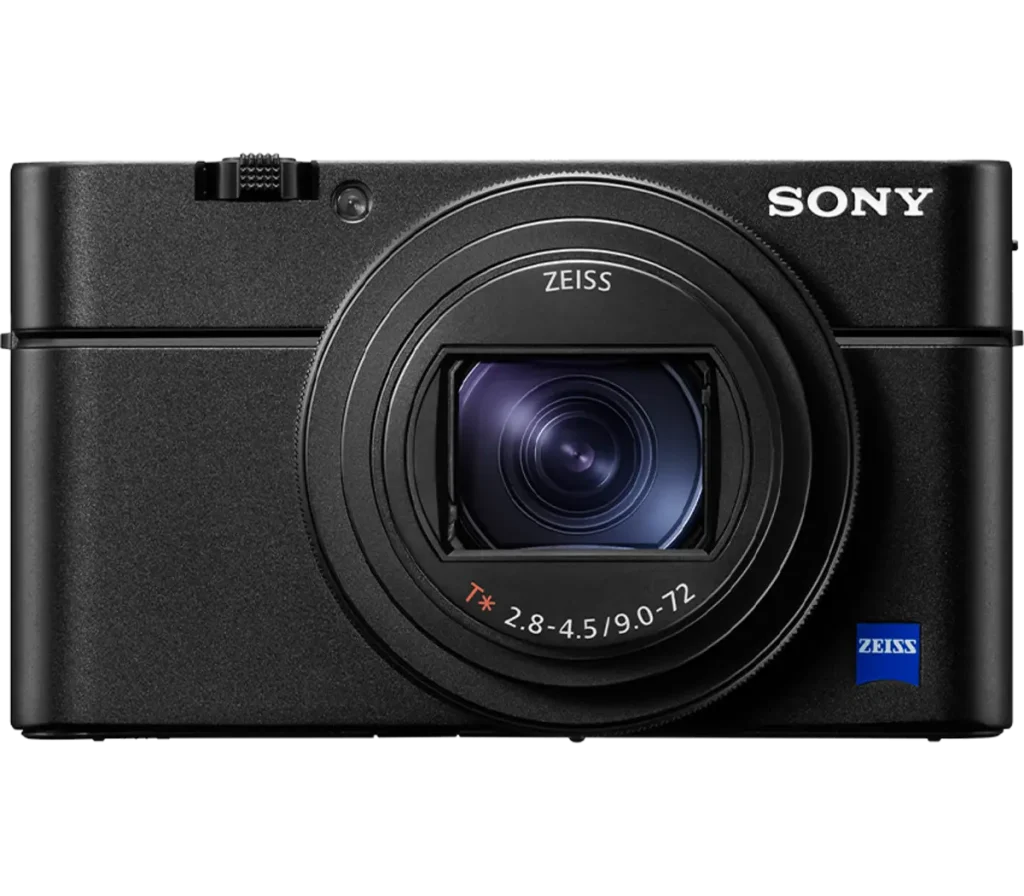
If you like the idea of a truly pocketable camera but want a zoom lens for flexibility, then the Sony RX100 VII is a great choice — one that I actually bought a few years ago and let Sofia use as her first-ever camera. She was a bit too young then to really appreciate what she had so we sold it on after a few months. However, in that time I got to use it and was impressed.
It offers a smaller 20MP 1″ sensor, so it doesn’t quite deliver the same image quality as the Fuji X100VI or the Ricoh GR cameras. But it’s still significantly better than a smartphone. Low light performance is decent for the sensor size, though again, you’re compromising compared to the larger APS-C sensors found in the other cameras on this list.
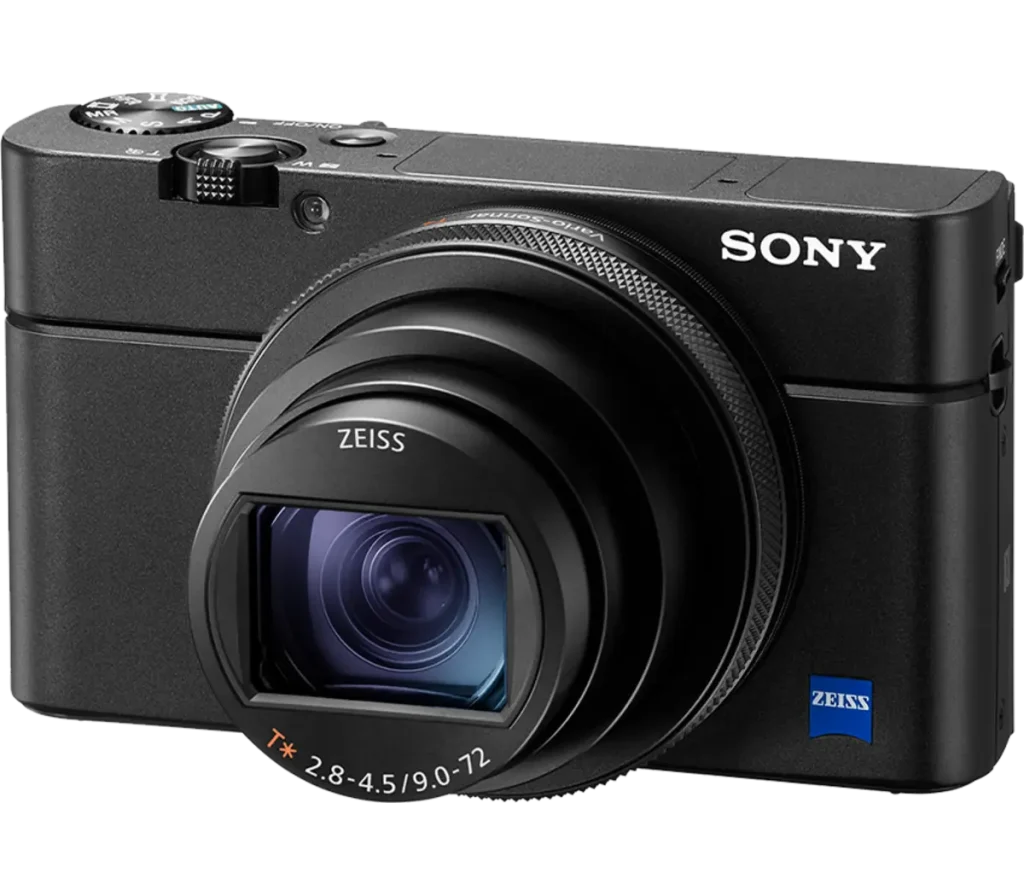
However, where you lose a bit of image quality, you gain massively in flexibility thanks to the 24–200mm f/2.8–4.5 lens. It’s frankly incredible that Sony managed to squeeze a lens of this range into such a tiny body. It allows you to shoot wide-angle landscapes one moment and nearly reach wildlife territory the next. That kind of flexibility means you’ll rarely miss a shot — at least not because you’ve got the wrong lens on.
The autofocus in the RX100 VII is also genuinely impressive, with excellent subject and face tracking. Despite being an older camera, the AF is probably the best on this list.
You also get a clever pop-up EVF. It’s not amazing, but it’s better than nothing — especially when shooting in bright sunlight where the rear LCD becomes hard to see.
As with the others on this list, the Sony offers USB-C charging, wireless image transfer, and in-body image stabilization.
Buy this if you want the most flexible, pocketable camera with better image quality than your phone. It’s not cheap, but there’s still nothing else that comes close in terms of size-to-performance ratio.
Where to Buy the Sony RX100 VII
If you want pocket-size flexibility with a 24–200mm zoom range, the RX100 VII is a fantastic option. Use the link below to check the latest price and support my work at no extra cost to you.
Check Price on Amazon

Best Premium Compact Camera – Leica D-Lux 8
- 17MP Four Thirds CMOS sensor
- 24–75mm equivalent f/1.7–2.8 zoom lens
- Optical image stabilization
- 2.36M-dot OLED electronic viewfinder
- 3″ fixed LCD screen
- 4K30p & Full HD video recording
- USB-C charging & Leica FOTOS app connectivity
- Bluetooth & wireless image transfer
- Compact premium body — ~403 g
- Battery: BP-DC15 (approx. 300 shots per charge)
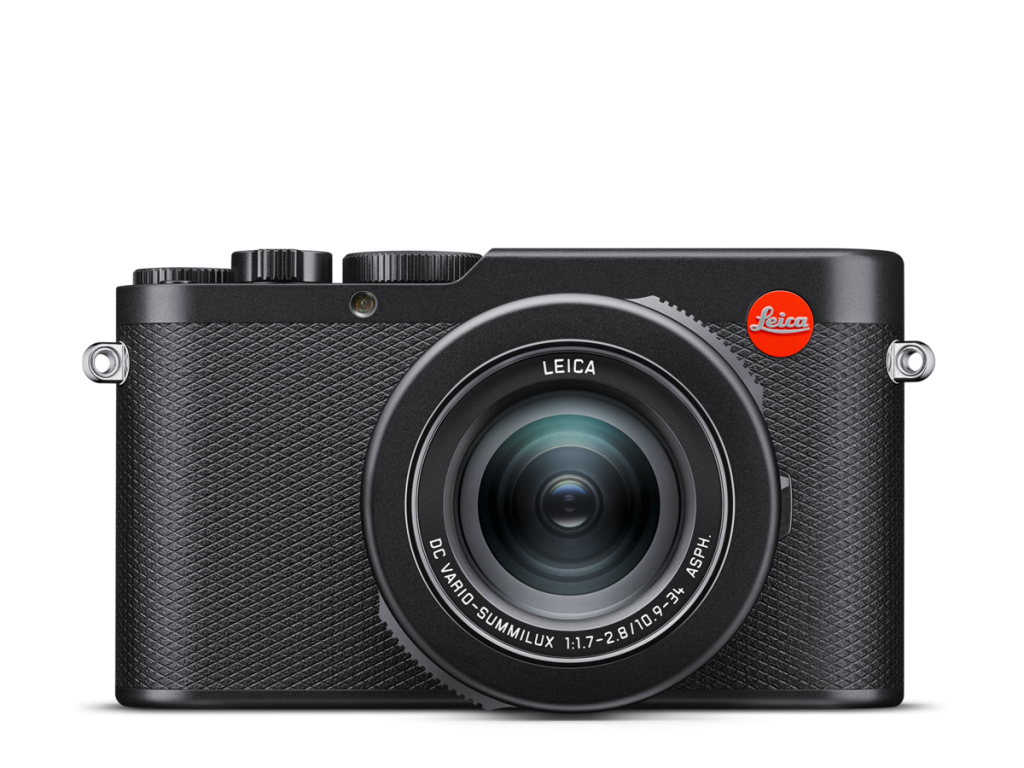
If you want to be part of that exclusive red dot club (and let’s face it, who doesn’t), the Leica D-Lux 8 offers you the chance at a much lower cost of entry.
It’s a compact camera that uses a 17MP Micro Four Thirds sensor — larger than a 1″ sensor but smaller than APS-C — and a bright f/1.7–2.8 24–75mm equivalent lens. That combination gives you very good performance in most situations, and the zoom range covers everything from wide-angle landscapes to short telephoto portraits.
It’s smaller than the Fuji X100VI while offering nearly as good image quality, but thanks to that zoom lens, it’s considerably more flexible.

What makes this interesting to me personally is that I used Micro Four Thirds cameras for a long time, and with a relatively bright zoom like this, I know this camera will be incredibly flexible while still delivering very good image quality. At f/2.8 on the long end, the lens can still create some shallow depth of field to isolate portrait subjects. And at f/1.7 on the wide end, it’ll perform well enough in most low-light situations.
The size and lens could honestly make this the best compact on the list.
The only real question is whether it’s worth the $1,595 asking price. My instinct says yes — but since this is the only camera on the list I haven’t owned (yet), I need to try one to be sure.
Buy this if you want the most flexibility in a small package with better image quality than any 1″ sensor can offer. The usual Leica style and handling will no doubt add to the overall shooting experience.
Where to Buy the Leica D-Lux 8
If the Leica D-Lux 8 has caught your eye, you can use the link below to check the latest price. Using this link won’t cost you anything extra, but it helps me keep publishing detailed, honest guides like this one.
Check Price on Amazon
In the end, the best travel camera is the one you’ll actually carry and enjoy using. For me, that’s often the Fuji X100VI — but I’ve loved using all of these for different reasons. Whether you’re after the stealth of a GR or the flexibility of the Sony , there’s something here that will help you make better memories — and better photos. This article will help you decide if it’s time to upgrade to a proper camera from your phone.
✨ Drop a hint: share my Best Gifts for Photographers list with the people buying for you this year — they’ll thank you for making it easy.
FAQ — Best Compact Travel Cameras (2026)
Are compact cameras still worth it in 2026?
Yes — more than ever. Compact cameras like the Fujifilm X100VI and Ricoh GR series offer much larger sensors, better low-light performance, and far more creative control than smartphones. If you care about image quality, shooting experience, or printing your photos, they’re still absolutely worth owning.
Which compact camera has the best image quality?
The Fujifilm X100VI still delivers the highest overall image quality thanks to its 40MP APS-C sensor, excellent f/2 lens, and strong JPEG output. That said, the Ricoh GR IV comes very close in a much smaller body, especially if you value portability.
What’s the best pocketable compact camera?
The Ricoh GR IV is the best truly pocketable camera you can buy in 2026. It offers APS-C image quality in a body that fits in a jeans pocket, with noticeably better autofocus and battery life than earlier GR models.
Which compact camera is best if I want a zoom lens?
The Sony RX100 VII remains unmatched if you want zoom flexibility. Its 24–200mm equivalent lens gives you far more compositional freedom than fixed-lens compacts, while still offering much better image quality than a phone.
link