Amazon Prime Day is taking place on July 16-17, and the best Prime Day camera deals can be very tempting, but we don’t see the same scale of discounts as Black Friday. Some camera companies don’t offer Prime deals at all, and even exclude Amazon from their own rebate schemes. With stock being volatile, our advice is that if you’re ready to buy a product then jump on it now – prices probably won’t fluctuate much, but stock levels will!
The best full frame mirrorless cameras from Canon, Sony and Nikon are, in my opinion, the best cameras we’ve ever seen. Having merged the advantages of mirrorless technology with large 35mm image sensors, these cameras are now adding AI-based autofocus systems, ridiculous resolution, and unbelievable burst rates.
However, they’re so good that it’s hard to know which one is actually right for the job. So I’m here to help you choose the best full frame mirrorless camera for your specific needs – whether you want something for wildlife photography, to take on your travels, or to shoot killer video.
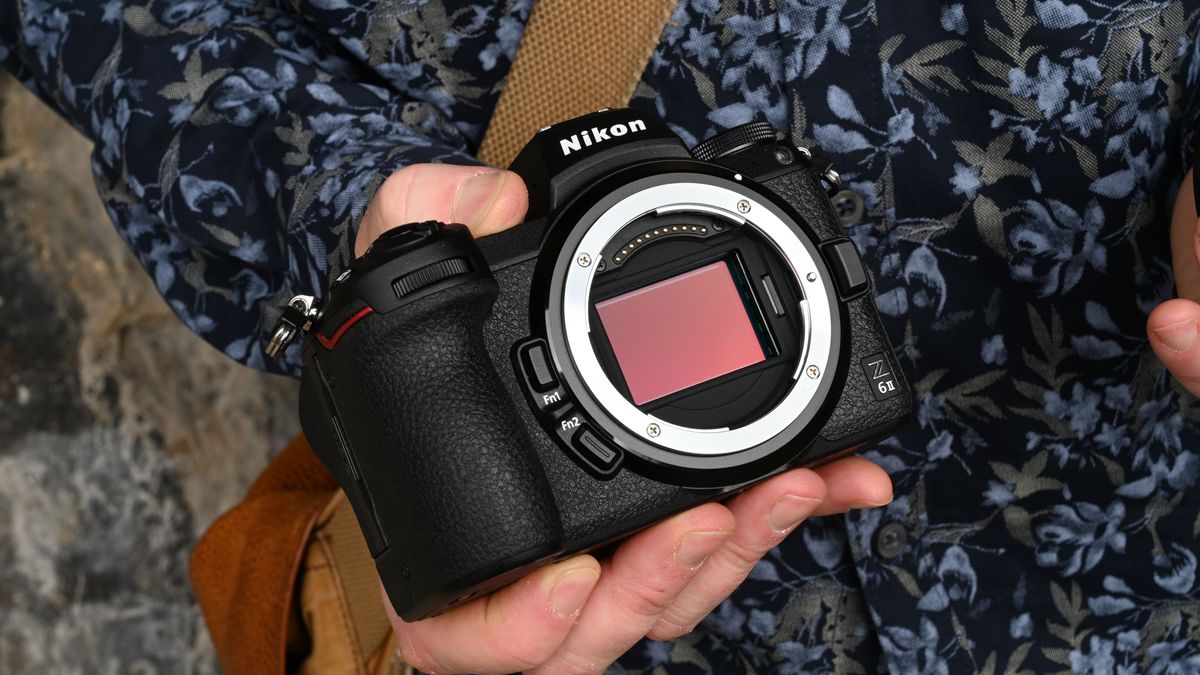
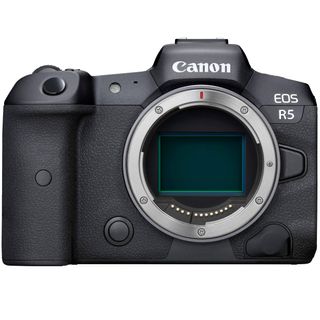
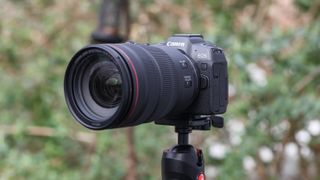
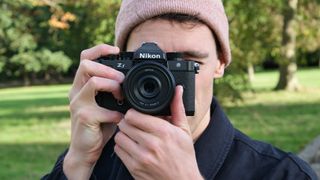
If you’re looking for the best camera overall, a jack of all trades that can handle any situation, I recommend taking a look at the Nikon Z8 and my personal favorite the Canon EOS R5 (which is so good, I actually bought one myself!). But to find the most suitable tool for your requirements, I’ve broken things down by category…
James Artaius
I’ve been using mirrorless cameras since 2014, and watched the full-frame players climb on the bandwagon one by one from Alpha to Z-mount. I’ve used the best (and worst!) full frame bodies from Canon, Sony, Nikon, Leica and Panasonic, for both personal projects and professional commissions, so my recommendations come from extensive field testing – and customer satisfaction!
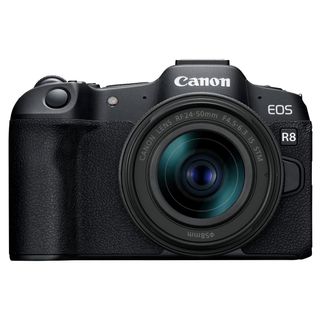
I’m blown away by what the R8 offers the beginner. The 24.2MP sensor delivers quality images, the 40fps burst mode enables you to try wildlife or sports, and the 4K 60p video is great for video. The only real sore point is the lack of image stabilization. Read more below
Best video
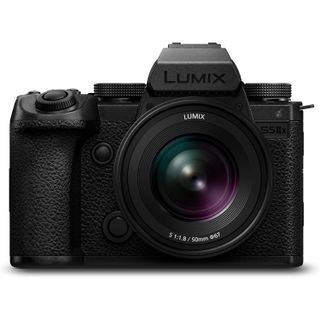
I love that it’s like a Batman camera in its blacked-out sleekness, and it’s also an unmatched filmmaking beast thanks to its open gate capture, 10-bit 4:2:2 video, ProRes RAW, B-RAW, recording to SSD, 6.5 stops of image stabilization… and AF that works! Read more below
Best for landscapes
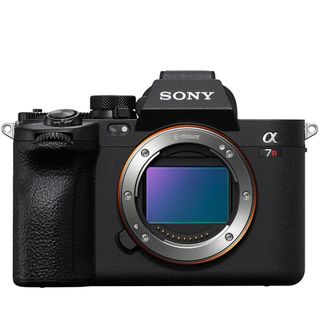
If I want to shoot landscapes, I want as much resolution as possible – and the 61MP A7R V packs more megapixels than any other full frame camera. Especially when you consider its 240MP high-res mode! Read more below
Best for street
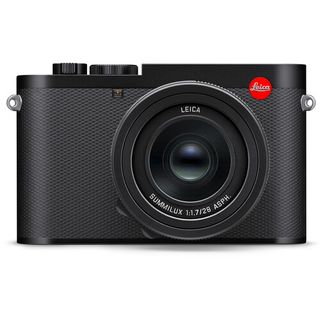
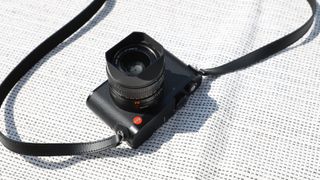
I call this the Fujifilm X100VI for grown-ups! The Q3 is a dream fixed-lens camera thanks to its 60.3MP sensor that offers multiple focal lengths, along with triple-resolution options and even 8K video if you want to capture some reportage footage. Read more below
Best for travel
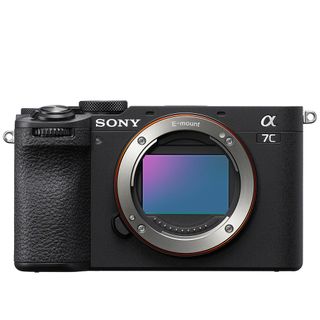
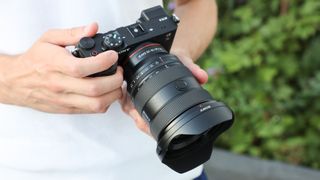
Want full frame power in an APS-C (or even Micro Four Thirds!)-sized body? Here it is. The A7C II is basically an A7 IV squeezed into a smaller body – and for my money it’s an even more compelling camera, thanks to some more advanced features. Read more below
Best hybrid
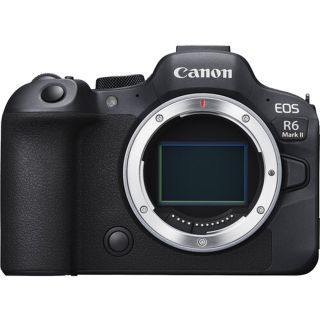
When I want a camera that handles video as effortlessly as stills, I know I can count on the R6 Mark II. Cranking out 24.4MP stills at up to 40fps, it handles sports as easily as landscapes. And with 4K 60p or FullHD 180p, it’s a video powerhouse too. Read more below
Best value
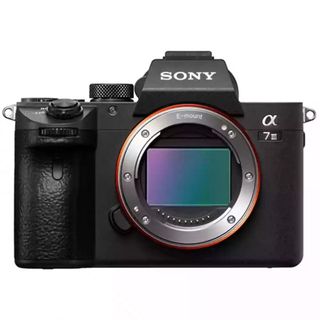
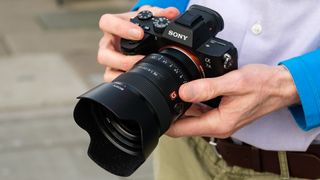
To get the best bang for your buck, I recommend a slightly older but still modern camera – and the A7 III is a great sweet spot. The 24.2MP sensor still cranks out great images and 4K video, with an AF system that’s still very respectable. Read more below
Best for wildlife
I believe in this camera so much, I bought one myself! It’s simply untouchable for wildlife thanks to its autofocus system that has tracked every animal, insect or fish I’ve ever pointed it at. Great 45MP stills and 8K video make this a monster performer.
Read more below
The best full frame mirrorless cameras in 2024
Why you can trust Digital Camera World Our expert reviewers spend hours testing and comparing products and services so you can choose the best for you. Find out how we test.
Best beginner
(Image credit: Gareth Bevan)
The best full frame mirrorless camera for beginners
✅ You’re new to photography: Its value to performance is unquestionable, and perfect for beginners just starting out
✅ You want fast FPS: taking images at 40 frames-per-second is incredibly fast for an entry-level camera
Don’t buy it if..
❌ You want IBIS: Entry-level cameras are built to a cost and the R8’s cost is the omittance of stabilization – so make sure you hold your camera and lens steady!
❌ Still Pricey: Considering it’s over a grand it’s still quite a push for those new to photography to stomach
I still can’t believe the incredible value presented by the EOS R8. Moreover, I can’t believe the performance offered by this entry-level full-frame camera – it’s essentially a baby R6 Mark II without the IBIS, second card slot, and ergonomics.
You get a lot of bang for your buck here. The 24.2MP sensor delivers great image quality, with Canon’s celebrated color science. It’s powered by the flagship-grade Dual Pixel AF II, which is the best autofocus system I’ve ever used. Between this, and the unbelievable 40fps continuous shooting, the R8 can be used for sports and wildlife – not something that many beginner cameras can boast!
It’s a beast for video, too, with 4K 60p that’s oversampled from 6K, along with FullHD at up to 180p, with options including 10-bit 4:2:2 and Log mode, and your video will benefit from the fully articulating touchscreen (again, not offered by many full frame cameras – let alone beginner bodies!).
It’s got everything someone starting out could ask for with the exception of in-body image stabilization – something that I personally miss when using this camera, but there are a bunch of stabilized Canon RF lenses (ditto EF lenses, which are more affordable and can be used with an adapter). And the teacher in me might actually advise beginners not to use stabilization, to teach better camera craft!
Read our full Canon EOS R8 review
Swipe to scroll horizontally
Lab results
Score
Rating
Resolution (ISO 200)
24/60
★★★
Dynamic range (ISO 200)
11 EV
★★★★
Noise (ISO 200)
41 decibels
★★★★
Best video
(Image credit: Jon Devo)
The best full frame mirrorless camera for video
Specifications
Megapixels: 24.2
Lens mount: Leica L
Screen: 3-inch vari-angle touchscreen, 1.84m dots
Viewfinder: EVF, 3.68m dots
Max continuous shooting speed: 30fps (electronic shutter)
Max video resolution: 6K (Full-sensor readout)/29.97/25/24/23.98p
Reasons to buy
+
Best in class video performance
+
Records to an external SSD
Reasons to avoid
–
Lacks a tally light
–
No 8K video
Buy it if
✅ You shoot video: With open-gate 6K 30p, ProRes RAW and B-RAW, 4:2:2 10-bit, LongGOP, SSD recording and more, this is a videographer’s dream.
✅ You rely on stabilization: When you don’t have a gimbal, the incredible in-body image stabilization (up to 6.5 stops) outperforms even higher-specced competition.
Don’t buy it if:
❌ You shoot a lot of texture: The camera omits a low-pass filter, which is great for fine detail – but can invite the moiré effect sometimes caused by patterns such as fabric.
❌ You rely on a tally light: A rare miss for the otherwise excellent video features is the lack of a tally light, to indicate when the camera is recording.
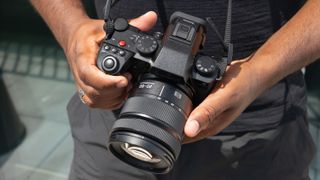
Panasonic has always had a rep for video excellence, but I’ve never been able to trust its archaic autofocus system. That all changed with the S5 IIX, which adds phase detect AF to its suite of tippy top video and cinema features.
HDMI RAW output, Apple ProRes RAW, Blackmagic B-RAW, 10-bit 4:2:2, All-I, LongGOP, live streaming, open gate capture, SSD recording, 6.5 stops of in-body image stabilization… this is simply a videographer’s dream, whether you’re a serious content creator or a dedicated filmmaker.
The only thing that’s really missing from its video arsenal is 8K video, for the simple reason that Panasonic doesn’t believe there’s enough demand for it. Though anyone who shoots video would certainly demand a tally light – something that’s notably absent from the camera.
It wouldn’t be my first choice as a stills camera, but I do love that the S5IIX offers a 30fps electronic shutter (with a healthy 200-frame RAW+JPEG buffer) and a 96MP High Resolution Mode, to capture supersize photos via pixel-shift.
Read our full Panasonic Lumix S5 IIX review
Swipe to scroll horizontally
Lab results
Score
Rating
Resolution (ISO 200)
24/60
★★★
Dynamic range (ISO 200)
12.34 EV
★★★★★
Noise (ISO 200)
40.55 decibels
★★★★
Best landscape
(Image credit: Rod Lawton)
The best full frame mirrorless camera for landscapes
Video: 4K cropped(oversamped)/uncropped up to 30/25p
Reasons to buy
+
61MP resolution
+
240MP high-resolution mode!
Reasons to avoid
–
Awkward menu system
–
Quirky CFexpress format
Buy it if:
✅ You need the highest resolution for professional work: this is one of the joint highest-resolution full-frame cameras out there, and if you need ultimate quality in your work, this is a must-have. ✅ You want a professional hybrid camera: while the Sony A7 IV is the better general choice for hybrid shooters, serious professionals might get more use out of the 8K on the A7R V
Don’t buy it if:
❌ You won’t use all those megapixels: the massive resolution is only really useful if you plan to print your work or display it on very large screens. If you just publish online then much lower resolutions will do just fine. ❌ You are on a budget: the A7R V is very expensive, and most creatives don’t need all its powers. The A7 IV, A7 III, or A7C might be better choices.
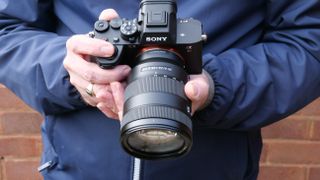
While it no longer has a monopoly on 60ish megapixel sensors, having been joined by the likes of the Leica SL3 and Sigma fp L, the mighty A7R V is still my top pick for landscape shooting thanks to its overall superior performance.
Landscape photographers love resolution, and the 61MP sensor still gives you more pixels than anything shy of a medium format camera. You can even boost this to an amazing 240MP, via the magic of pixel shift, to eke out even more detail in your shots. Just be aware that this isn’t suitable if there’s any movement in your scene, such as water or foliage.
I’m not a fan of Sony’s colors in general, but for landscapes the color reproduction is very good – and the superb back-side illuminated sensor packs excellent dynamic range even at higher sensitivities.
Should you want to move beyond tripods and resolution, the A7R V also offers a great autofocus system and 10fps burst shooting, along with 8K 24p video. While I don’t recommend this as a video-first device, the option to capture hi-res footage to complement your hi-res stills is very welcome.
My only criticisms are Sony’s infamously unfriendly menu system, and the choice of CFexpress Type A memory. It’s cool that the A7R V offers hybrid card slots, which also support standard SD, but I would have preferred the superior CFexpress B cards (which are both faster and used by other manufacturers, should you ever switch).
Read our fullSony A7R V review
Swipe to scroll horizontally
Features
It might be the ‘resolution specialist’ but this camera has everything with 8K video, 10fps, and AI-powered autofocus
★★★★★
Design
Usual great Sony body design, the vari-angle pivot screen and extra custom function buttons are great additions
★★★★★
Performance
Stills, video, sports, it does it all The downsides are 61MP files are very big to work with, and its headline 8K video is cropped.
★★★★★
Value
All this power does not come cheap, and the A7RV is priced right up in the dedicated pro bracket
★★★★☆
Best street photography
(Image credit: Gareth Bevan / Digital Camera World)
The best full frame mirrorless camera for street photography
Specifications
Megapixels: 50MP
Lens: Fixed 28mm, f/1.7
LCD: 3in flip touchscreen
Viewfinder: EVF
Continuous shooting: 15fps
Max video resolution: 8K30p, 4K60p, 1080FHD120p
Reasons to buy
+
Fantastic 60 / 36 / 18MP image quality
+
8K video (but no audio inputs)
Reasons to avoid
–
Ergonomics aren’t for everyone
–
Excellent but expensive
–
Lens can’t be changed
Buy it if:
✅ You love 28mm focal length: The Q3 offers the only f/1.7 aperture lens in the whole Leica range, but it is also fixed to the body of the Q-series, so you have to love shooting at 28mm
✅ You want to follow the trend: Thanks to massive media spike in Leica camera the Leica Q3 has become ‘on-tend’ – which is never a bad thing.
Don’t buy it if:
❌ You want to shoot other focal lengths: With its fixed 28mm lens that you can’t you can’t change, our only option is to crop.
❌ You want an optical viewfinder: The Q3 features a high-res EVF without the optical VF of Leica M models
While I don’t buy into the “Leicas are the best street cameras” hype, I can’t deny that the Q3 is phenomenal for street photography. This is the Fujifilm X100VI for grown-ups, with an amazing triple-resolution sensor that captures 60.3MP, 36.5MP or 18.6MP images depending on what you need for workflow and output.
Its fixed Summilux 28mm f/1.7 Asph. lens delivers pristine images, but the Q3 makes the most of its 60.3MP sensor to offer further focal lengths via digital cropping: 35mm, 50mm, 75mm and 90mm.
Leica’s glorious color rendition and deep, detailed image files look fantastic straight out of camera and are a joy to work with in post-production. And the magic extends to video, as the sensor is capable of 8K capture – though bear in mind that there’s no microphone input, so this isn’t going to cut it as a pure videography tool. I also find Leica’s AF system occasionally hit and miss, though purists would argue that street shooting should be manual anyway!
While it’s a beautiful camera, and feels good in the hand for short periods, its ergonomics won’t be for everyone – and this can get a bit uncomfortable after being tightly clenched for long shooting sessions.
Read our full Leica Q3 review
Swipe to scroll horizontally
Leica Q3
Header Cell – Column 0
Notes
Score
Features
60-megapixels 8K video, Subject recognition and tracking
5 / 5
Build & handling
Built like a tank, amazing 28mm f/1.7 lens, quick AF to manual focus
4.5 / 5
Performance
Amazing image quality, snappy autofocus, user friendly operation.
5 / 5
Value
This is a luxury, handmade camera with the performance to match
4 / 5
Best travel
(Image credit: Gareth Bevan / Digital Camera World)
✅ You want all the power of an A7 in a compact form: if you want a big full-frame sensor, IBIS, AI AF, and all the goodies from the A7IV but in a camera that travels well, then you’ve found it. ✅ You are a keen hybrid content creator: all of Sony’s cameras are great hybrid cameras, and the A7C II is a great compact video camera that offers great video specs and pairs well with gimbals.
Don’t buy it if:
❌ You aren’t really interested in photography: if you are just a video shooter, then the Sony ZV-E1 is fundamentally the same camera but with some extra video features like a built-in mic. ❌ You want to use big lenses: you can use big lenses on the A7C II, but I wouldn’t recommend it as the small body and grip is not comfortable to hold, and the balance is way off.
Other people thought it was crazy, but I loved the idea of the A7C line: to stuff a full frame camera into an APS-C chassis. That’s the formula for a fantastic travel camera! And what you get with the A7C II is effectively a Sony A7 IV squished into the body of an A6XX – with all the same specs, and even a few more advanced features.
On top of the familiar tech – the 33MP sensor, 10fps shooting, (cropped) 4K 60p – you also get a dedicated AI processor that packs the latest subject-tracking autofocus modes, Auto Framing for video (which follows human subjects and crops in, like a virtual cameraman), as well as features like timelapse and focus bracketing (something I always appreciate).
However, the compromise for the smaller form factor is a smaller viewfinder with less resolution, a single memory card slot (with reduced buffer) and a slightly reduced flash sync speed. Are any of these dealbreakers for a travel camera? For me personally, no.
Without a lens, the A7C II is pocket-sized. And it’s so light that it’s not going to cause neckache or overload the weight of your luggage. The proviso is that I recommend using it with smaller lenses, both for the practicalities of travel and because the body is so small that bigger lenses don’t handle very well.
Read our full Sony A7C II review
Swipe to scroll horizontally
Features
A bigger 33MP sensor, oversampled 4K video, IBIS and the latest AI autofocus makes this a compact powerhouse
★★★★★
Design
Very compact, but the full-frame sensor is begging to be used with big lenses which is an ergonomically poor experience
★★★☆☆
Performance
Excellent performance in photo and video, Sony’s autofocus is the star of the show
★★★★★
Value
Priced below the rest of the A7 range, this is Sony’s latest tech at the best value
✅ You want an “all-in-one camera: with 24MP full-frame stills and 4K video the R6 Mark II is the perfect camera for those wanting a hybrid camera for both stills and video
✅ You want great AF: with killer autofocus the R6 Mark II’s AI AF modes destroy the competition and make sure your images are as sharp as possible
Don’t buy it if..
❌ You want unlimited recording: for 4K HQ video you will be hit by recording limits which is a shame for users
❌You want more than SD cards: with only two SD card slots you are limited in recording speeds to superior CFExpress cards
Hybrid cameras have become huge in recent years, both for the burgeoning content creation market and for one-man crews and wedding shooters who need to capture photos and video in equal measure.
I’ve been a 6-series user since the DSLR days, and the R6 Mark II continues the proud tradition of all-round stills and video performance. I’m astounded that it actually bests the flagship Canon EOS R3 in some respects, with more resolution and faster burst shooting (though it has a much more limited buffer).
My favorite aspect of current EOS R cameras is the autofocus, which recognizes and sticks like glue to virtually any subject you point the lens at. This is particularly useful for video, and for solo shooters who need to be sure that the right thing is in focus, when shooting in oversampled 6K or FullHD 180p for super slow-motion.
You’ll need to be wary of the R6 Mark II’s recording limits in high-quality mode, though, which tops out at 40 minutes for 4K 60p (compared to 6 hours for 4K 30p). Video does benefit from focus breathing correction, though, and there’s a pre-capture feature for both stills and video that enables the camera to capture the moment before you hit the shutter button – which has saved my bacon a few times!
Read my full Canon EOS R6 Mark II review
Swipe to scroll horizontally
Lab results
Score
Rating
Resolution (ISO 200)
24/60
★★★
Dynamic range (ISO 200)
11.5 EV
★★★★
Noise (ISO 200)
43 decibels
★★★★★
Best value
(Image credit: Future)
The best value full frame mirrorless camera
Specifications
Megapixels: 24.2MP
Lens mount: Sony E
Screen: 3in tilting touchscreen, 921,600 dots
Viewfinder: Electronic
Max burst speed: 10fps
Max video resolution: 4K
Reasons to buy
+
Tried, tested and trusted
+
Still offers great photo and video
Reasons to avoid
–
Sony colors can be hard to work with
–
Poor image stabilization
Buy it if:
✅ You want to try full-frame without spending a lot: full-frame photography offers many benefits for subject separation, low-light performance, and dynamic range. The A7 III is a great way to try some of these without breaking the bank. ✅ You are happy enough with older tech: the A7 III doesn’t have the latest tech, but new tech is overrated in creativity, and the A7 III can still create incredible images and video in the right hands.
Don’t buy it if:
❌ You shoot a lot of professional video: the 4K video on the A7 III is great, but the autofocus and IBIS have been improved dramatically on newer models, which are a better choice for professional work. ❌ You aren’t bothered about sensor size: if the thought of full-frame doesn’t do anything for you, then there are far more powerful APS-C and MTF cameras for much less money.
When people ask me what camera offers the best value, I always advise looking back a generation. This way you get a camera that’s still modern, but is much cheaper than the latest models.
The A7 III is so good that many owners haven’t felt the need to upgrade. You won’t get the latest AI autofocus modes or crazy burst speeds, but it already has a very good hybrid AF system that will keep up with everything except the fastest action.
More important to me is the great image quality from that reliable 24.2MP Sony sensor, dual memory card slots so you don’t have to worry about losing images, and bang-on ergonomics that make the comfortable a pleasure to use. And while it doesn’t have the fancy codecs or options of contemporary cameras, its 4K is still pretty respectable.
My only reservations are that Sony’s color science is a bit of a mess (generally yellowy and not the best for skin tones) and its in-body image stabilization is a few steps behind the competition. Otherwise, this is an incredibly capable camera that can produce images on par with far more modern and expensive bodies.
Read our fullSony A7 III review
Swipe to scroll horizontally
Features
It might be an older model, but still has the mod-cons like eye detection, IBIS, and 4K video
★★★★★
Design
Fantastic hybrid handling, small enough to travel yet big enough for pro work. Menus are a bit of a nightmare
★★★★★
Performance
Newer Sony cameras do things much better, but the A7 III has great 4K vids, and 24MP is still respectable
★★★★★
Value
A perfect way to get into full frame photography with a lot of killer features for incredible value
★★★★★
Best wildlife
(Image credit: James Artaius)
The best full frame mirrorless camera for wildlife
✅ You need the best autofocus: I’ve used every wildlife camera out there, and nothing is more accurate!
✅ You want resolution: You can capture 45MP stills (actually up to 400MP!) and 8K video in amazing quality.
Don’t buy it if:
❌ You primarily want to shoot 8K video: If 8K is your main focus, the Nikon Z9 is a better option.
❌ You want the best standard 4K: The R5’s oversampled 4K HQ is fantastic, but vanilla 4K isn’t anything special.
The EOS R5 is a powerhouse full frame mirrorless camera that will satisfy any professional photographer or videographer. It’s a jack-of-all-trades camera, excelling in various segments and earning spots in categories like best for resolution, best for video, best for sports, and practically best at everything.
When it comes to photos – it boasts a 45MP sensor that captures intricate details and an autofocus system reminiscent of the EOS-1D X Mark III, with an impressive 5,940 AF points. The 12fps continuous shooting capability also makes this camera a rival to some of the best cameras for sports.
The EOS R5’s video quality is also a showstopper, offering uncropped 8K Raw video internally and cinema-grade visuals. However, the R5’s big Achilles’ heel lies in heat build-up and recording limits during extensive video use, which are not handled as well as later rivals. But a small matter that shouldn’t overshadow everything else the EOS R5 is capable of.
Read our full Canon EOS R5 review
Swipe to scroll horizontally
Speed
20fps via its electric shutter is great , but not the best on the list
3.5 / 5
Features
Massive 45MP sensor and 8K video means you can capture stunning wildlife visuals
5 / 5
Vaule
Pricey to most, but for 8K video and 45MP, it’s good value
4.5 / 5
How to choose the best full frame mirrorless camera
Choosing the perfect full-frame mirrorless camera involves juggling various essential factors. First up, establish a budget that suits your use-case and photography level. The cameras in this guide span a broad price range, from more affordable entry-level options to premium professional models.
Resolution is a crucial aspect. Determine the sensor resolution that aligns with what you will be shooting. Higher megapixels mean sharper images but also result in larger file sizes for storage and editing. Also evaluate autofocus capabilities, low-light performance, video quality, weather-sealing, and any other functionalities that matter most to your photography style.
Where are you taking your cameras? Assess its size, weight, and ergonomics to make sure it is right for your needs. Heavy cameras are no fun to travel with, but small cameras are awkward to use for long periods or with big lenses.
Speaking of lenses – each brand offers its set of lenses and accessories, so take a look and make sure that the camera has the right lenses in the right price range for your needs.
Lastly, check out the reviews and advice in this guide. We test all the cameras we feature here and offer our first-hand and unbiased opinion on everything that is good and bad about each option.
(Image credit: Gareth Bevan / Digital Camera World)
Is mirrorless better than DSLR?
Both mirrorless and DSLRs have strengths and weaknesses, but it is generally accepted that mirrorless technology has surpassed what DLSRs are capable of, especially when it comes to focusing, shooting speeds, and size. Although DSLRs are still favored by many for their optical viewfinder experience.
What full frame mirrorless camera has the best image quality?
Image quality is subjective and depends on where the image will be used. All the cameras on this list have exceptional baseline image quality. The highest resolution full frame mirrorless camera is the Sony A7R V with a 60MP sensor, allowing images to be cropped or enlarged further without dipping in overall quality.
How we test the best full frame mirrorless cameras
Our testing procedure for full-frame mirrorless cameras involves putting cameras through their paces both in real-world shooting scenarios and in the lab. With full-frame mirrorless cameras, we focus more on the specific use cases of each camera, for example, we will test high-speed sports cameras with fast-moving subjects, or high-resolution cameras on subjects with lots of intricate details.
We’ve put every one of these full-frame mirrorless cameras to the test to get a feel for how they handle in day-to-day use, as well as our opinion on the design, ergonomics and build quality.
As well as practical tests, we also employ carefully controlled lab tests to measure resolution, dynamic range, and signal-to-noise ratio. We use ISO resolution charts to measure resolution, and DxO Analyzer test equipment for dynamic range and noise analysis. With these extensive testing procedures, we build up a clear, objective picture of how the camera performs.
We combine both practical and lab data when finalizing both the in-depth review of each full-frame mirrorless camera and the recommendations in this guide.